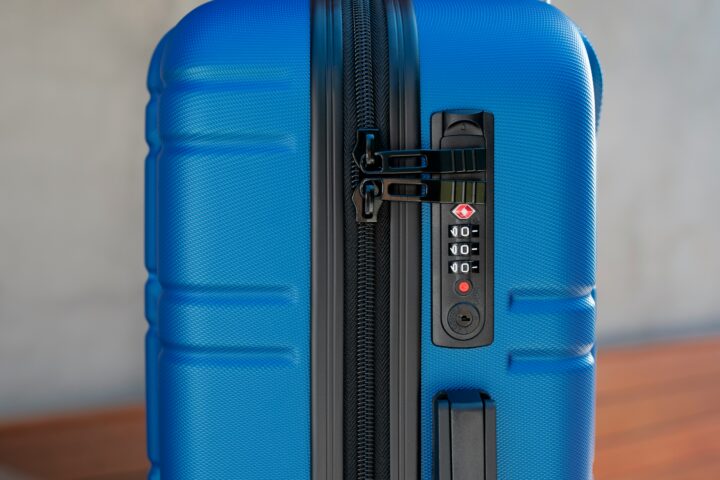
If you’ve ever bought a TSA-approved lock thinking your bag is safer, there’s something you should know, and TSA isn’t exactly advertising it.
Airports have two distinctive security checkpoints: passenger screening and baggage screening.
I worked in TSA’s baggage department for a period of time. TSA officers with experience in both areas are called Dual Officers. It’s a role that gives you a perspective most travelers never get – and most TSA officers don’t either.
During my time as a Dual Officer, I saw firsthand how TSA-approved locks are actually handled. What I learned is that the whole thing is largely a marketing play.
The Volume Nobody Accounts For
Every passenger can check two or more bags. At an airport processing tens of thousands of travelers a day, you’re talking about a staggering volume of luggage moving through a screening area most people never see.
And here’s something worth knowing: TSA officers are still manually reviewing all of it. No AI, no automation – a human being is looking at every single bag.
Now think about what that means when things back up.
What Really Happens to Your TSA-Approved Lock
@travelwiththeharmony TSA Approved Locks are a SCAM ‼️#Travelwiththeharmony
The pitch for TSA-approved locks is that TSA holds master keys for these locks, so in theory, an officer can open your bag without damaging anything, check it, and re-lock it.
That’s not necessarily 100% accurate.
The reality is that many baggage checkpoints only have one universal key for the entire team. When you’ve got a line of officers working through hundreds of bags, nobody’s going to track down the key or wait for it to free up.
They’re going to reach for the lock cutter because there are typically more lock cutters at a checkpoint than there are keys.
Under TSA regulations, officers are legally permitted to cut your lock if they need to access your bag for screening. No reimbursement required.
How to Tell If TSA Cut Your Lock or Opened Your Bag
If TSA inspects your bag, policy says they should leave a paper notice inside. Officers call them “Love Notes” internally.
Does every inspected bag get one? Honestly, no. I’ve inspected bags and forgotten to drop the note in myself. It happens.
But if your lock gets cut, you’ll almost certainly find out – because the broken pieces are placed back inside your bag. That’s standard practice. If you open your suitcase and find your lock in pieces, now you know exactly what happened.
Are TSA-Approved Locks Worth It? One Last Thing
Yes – with realistic expectations.
A TSA-approved lock still deters casual tampering and keeps zippers from popping open in transit. But if luggage security is a priority, consider bags with built-in locking mechanisms. Built-in locks are far less likely to be cut because damaging them risks damaging the bag itself.
TSA-approved doesn’t mean TSA-protected. It means TSA-accessible.