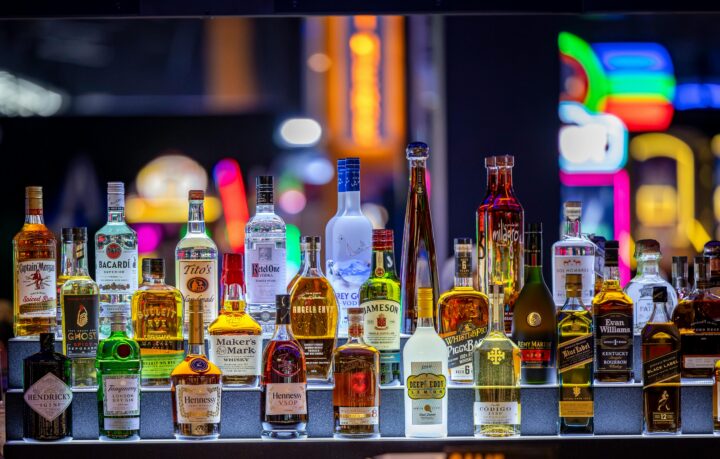
During my eight years as a Transportation Security Officer, I personally confiscated well over 250 duty-free bottles of alcohol. Every single one of those passengers thought they had done everything right, and most of them had.
What they didn’t know is that doing everything right isn’t always enough.
If you read my piece on Yahoo about the hidden BLS clause, this goes deeper.
These are five specific reasons your duty-free bottle doesn’t make it through – straight from someone who took them.
-
The Bottle Doesn’t Fit The Scanner
Every duty-free bottle that comes through a U.S. checkpoint must be screened by a Bottle Liquid Scanner (BLS). The machine analyzes the contents of sealed containers for potential threats, which is exactly why duty-free carry-ons are allowed at all.
But the BLS has a fixed aperture, so the bottle must physically fit inside the machine to be cleared. Wide-base decanters, oversized gift sets, extra-tall formats, and heavily contoured premium bottles are the usual types that are confiscated.
It’s pretty simple: If it doesn’t fit, it doesn’t fly in the cabin. This is one of the places in the world where size really matters.
-
You opened the tamper-evident bag
The duty-free retailer seals your purchase in a transparent, tamper-evident bag at the point of sale. That bag is not a suggestion – it is one of the core conditions under which TSA is permitted to allow the bottle past the checkpoint in your carry-on.
Once it’s been opened, that purchase is no longer valid in the eyes of TSA.
It doesn’t matter why you opened it. It doesn’t matter if the bottle is completely full and obviously untouched.
A broken seal means the item can no longer be verified as a secure duty-free purchase, and the officer has no choice but to treat it like any other oversized liquid.
-
The bottle is too thick for the scanner to read
This one catches people off guard because the bottle technically fits inside the BLS, but it just can’t be scanned properly. Certain bottles, particularly heavy crystal decanters and thick-walled premium spirits packaging, are dense enough that the scanner can’t get a clean read on the liquid inside.
The BLS needs to analyze the contents, and if the glass is too thick, the machine can’t do its job. An inconclusive result is treated the same as a failed screen.
-
The bottle is opaque
The BLS works by scanning through the container to analyze the liquid. If the container is opaque – ceramic bottles, certain painted or frosted glass designs, metal flasks, any packaging that blocks the scan – the machine literally cannot see what’s inside.
It doesn’t matter how premium the product is or how obvious it seems that the contents are just whiskey. If the scanner can’t read it, the item can’t be cleared.
Opaque duty-free packaging is one of the most consistent sources of confiscations I saw, because these tend to be the high-end bottles people are most excited to bring home.
-
Your receipt is missing or outside the 48-hour window
TSA’s duty-free carry-on allowance applies specifically to international purchases made within the past 48 hours. If you can’t produce a receipt, the TSA officer has no way to verify when or where the bottle was purchased, and it gets pulled.
The same outcome applies if your receipt is present, but the purchase date falls outside that 48-hour threshold. This one trips up travelers who buy duty-free early in a multi-leg trip, spend a day or two abroad, and assume the receipt is just a formality. It isn’t.
The honest answer to avoiding all of this is to make the purchase within 24 hours of your departure.